AI Chatbot vs AI SDR: Which Qualifies Leads Better?
AI SDRs automate outbound. AI chatbots qualify inbound. Compare both approaches and see why passive intent capture wins.
AI SDRs and AI chatbots both promise to qualify leads without human effort. They solve different problems. AI SDRs automate outbound - writing cold emails, booking meetings, and following up on sequences. AI chatbots qualify inbound - answering prospect questions, detecting buying signals, and scoring leads from conversations.
The question is not which technology is better. It is which approach matches how your buyers actually want to engage. And the data is clear: buyers increasingly prefer to research independently before talking to anyone - rep or robot.
Here is a direct comparison of both approaches, when each works best, and what happens when you combine them.
Sources: Forrester 2024 State of Business Buying
What Is an AI SDR?
An AI SDR (Sales Development Representative) is software that automates outbound prospecting tasks traditionally done by human SDRs. Platforms like 11x, Artisan, and Qualified's Piper handle:
- Cold email generation - writing personalised outbound emails at scale
- Sequence management - multi-touch cadences across email and LinkedIn
- Meeting booking - calendar scheduling when prospects respond
- Lead research - pulling firmographic and technographic data for targeting
- Follow-up automation - replying to responses and handling objections
The value proposition: replace or augment your SDR team with AI that works 24/7, sends more volume, and costs less per meeting booked.
Where AI SDRs Excel
AI SDRs work well when:
- You have a defined ICP and target account list
- Your motion is high-volume outbound (hundreds of touches per day)
- Meeting booking is your primary SDR metric
- You need scale that human SDRs cannot provide
Where AI SDRs Struggle
- Reply quality is low. AI-generated emails are getting better but prospects increasingly recognise them. Response rates for AI outbound are declining as inboxes get noisier.
- No inbound coverage. AI SDRs do not handle prospects who come to you. If someone visits your profile or website and asks a question, the AI SDR is not there.
- Qualification is shallow. AI SDRs qualify based on firmographics and response behaviour - did they reply? Did they click? This tells you engagement, not intent depth.
- Buyer friction. Prospects who receive an AI-generated email and respond end up in an automated back-and-forth. It often feels like talking to a bot - because they are.
What Is an AI Chatbot for Lead Qualification?
An AI chatbot for lead qualification lives on your website, digital profile, or shared link. Prospects engage with it on their own terms - asking questions, exploring your product, and researching your solution. The chatbot answers from your uploaded sales documents and passively detects buying signals from the conversation.
Platforms in this category include Parsley, Drift (now Salesloft), Intercom, and Qualified's website chat. Parsley's approach is distinct: the chatbot lives on individual sales profiles rather than a company website, and it detects MEDDIC qualification signals passively from natural conversation.
Where AI Chatbots Excel
AI chatbots work well when:
- Prospects are self-researching before talking to sales
- Your buying process is consultative and requires understanding prospect needs
- You want contact-level intent data, not just account-level signals
- Lead qualification matters more than lead volume
Where AI Chatbots Struggle
- No outbound motion. Chatbots wait for prospects to come to them. They do not generate new pipeline from cold prospects.
- Dependent on traffic. If nobody visits your profile or website, the chatbot has nobody to qualify.
- Variable engagement depth. Some prospects ask detailed questions; others ask one thing and leave. The qualification signal varies.
Head-to-Head Comparison
| Dimension | AI SDR | AI Chatbot (Passive Qualification) |
|---|---|---|
| Motion | Outbound (push) | Inbound (pull) |
| Prospect experience | Receives automated outreach | Engages on their own terms |
| Qualification method | Firmographics + response behaviour | Conversation signals + MEDDIC detection |
| Signal depth | Shallow - "they replied" or "they clicked" | Deep - "they asked about pricing for 40 reps on Q2 timeline" |
| Signal type | Account-level intent | Contact-level intent |
| Buyer friction | High - prospects know it is automated | Low - prospects choose to engage |
| Volume | High (hundreds of touches/day) | Lower (depends on traffic/outreach) |
| Cost per meeting | Low at scale | Varies by conversion rate |
| CRM integration | Yes - syncs meetings and responses | Yes - syncs conversations, signals, and scores |
| Works 24/7 | Yes | Yes |
| Personalisation source | Firmographic data, LinkedIn scraping | Prospect's own questions and concerns |
Source: Gartner, 2025.
The Key Difference: Push vs. Pull Qualification
The fundamental difference is not the technology - it is the motion.
AI SDRs push outbound messages to prospects who may or may not be in-market. The qualification signal is whether they respond. This is efficient at scale but noisy. You generate meetings, but many are with people who replied out of curiosity or politeness - not buying intent.
AI chatbots wait for prospects to pull information. The qualification signal is what they ask. This is lower volume but higher fidelity. When someone voluntarily asks your chatbot "What does implementation look like for a team of 30 on HubSpot?", you do not need a scoring model to tell you they are qualified.
Qualify leads from what they ask, not whether they replied
Parsley's AI chatbot detects MEDDIC signals from natural prospect conversations. No outbound spam - just structured intent data from people who are actually researching.
Get started freeWhen to Use Each (And When to Use Both)
Use an AI SDR When:
- Your pipeline is empty. You need to generate conversations from scratch with cold prospects. AI SDRs create top-of-funnel activity that human reps cannot sustain at scale.
- Your ICP is well-defined. You know exactly who to target and AI can personalise outreach based on firmographic and technographic signals.
- Meeting volume is the metric. Your sales motion prioritises booked meetings and your closers can handle qualification on the call.
- You have a large TAM. When your addressable market runs into the thousands, manual outbound is not feasible.
Use an AI Chatbot When:
- Prospects are researching you. If you are active on LinkedIn, share content, or have a web presence, prospects are looking at your profile. Give them a way to ask questions and capture that intent - the LinkedIn profile chatbot guide walks through the five-step setup.
- Qualification depth matters. For consultative B2B sales where understanding prospect needs drives deal velocity, conversation signals beat response behaviour.
- Your reps need pre-call context. AI chatbot conversations give reps a complete picture of what the prospect cares about before the first meeting - not just that they clicked a link.
- Buyer experience matters. In markets where relationships drive revenue, an AI chatbot that answers questions feels consultative. An AI SDR that sends cold emails feels transactional.
Use Both When:
The strongest setup combines outbound generation with inbound qualification:
- AI SDR generates the initial touch. Cold email or LinkedIn message introduces the rep and includes a link to their digital profile.
- Prospect engages on their own terms. Instead of replying to the email, they click through to the profile and ask the chatbot questions.
- AI chatbot qualifies passively. The conversation detects MEDDIC signals, scores the lead, and syncs to the CRM.
- Rep follows up with context. Instead of "thanks for replying to my email," the rep says "I saw you were asking about HubSpot integration for your team - here is how that works."
This is the hybrid model: outbound for reach, inbound for qualification. The AI SDR opens the door. The AI chatbot tells you who walked through it and what they want.
Source: Salesforce State of Sales, 7th Edition, 2026.
The Qualification Depth Gap
The core argument for passive chatbot qualification over AI SDR qualification comes down to signal depth.
AI SDR Signals
- Opened the email (engagement)
- Clicked a link (interest)
- Replied to the email (response)
- Booked a meeting (conversion)
- Company matches ICP (fit)
These are binary signals. They tell you that something happened, but not why. A prospect who replies "sounds interesting, send me more info" scores the same as one who replies "we are evaluating three vendors this quarter and need to decide by June."
AI Chatbot Signals
- Asked about pricing for a specific team size (budget + metrics)
- Compared your solution to a competitor (decision criteria)
- Mentioned a deadline or trigger event (timeline)
- Asked about integration with their CRM (technical requirements)
- Returned multiple times (sustained interest)
- Shared the profile with colleagues (champion behaviour)
These are dimensional signals. They tell you what the prospect cares about, how far along they are, and what your follow-up should address. Each signal maps directly to MEDDIC qualification criteria - without anyone asking a single discovery question.
Frequently Asked Questions
Is an AI SDR the same as an AI BDR?
Functionally, yes. Some vendors use SDR (Sales Development Representative) and others use BDR (Business Development Representative). In both cases, the AI automates outbound prospecting tasks - email, LinkedIn, follow-up, and meeting booking. The distinction between SDR and BDR varies by company, but AI vendors use the terms interchangeably.
Can an AI chatbot do outbound?
Not in the traditional sense. An AI chatbot does not send cold emails. However, it extends outbound effectiveness. When a rep includes their profile link in an outbound email or LinkedIn message, the chatbot is the destination. Prospects who click engage with the chatbot instead of replying to the email. This means the outbound motion generates inbound qualification signals - the best of both worlds.
Which approach is cheaper?
AI SDRs typically cost $500-2,000/month and replace or augment 1-3 human SDRs. AI chatbots like Parsley are pay-as-you-go at 25¢ per conversation, with 10 free starter conversations and unlimited team seats. (For the wider category, see our roundup of the best lead qualification software.) In raw cost, chatbots are dramatically cheaper. But the comparison is not apples-to-apples: SDRs generate pipeline from nothing, while chatbots qualify pipeline that already exists. The better question is cost per qualified lead, not cost per tool.
Will AI SDRs replace human SDRs?
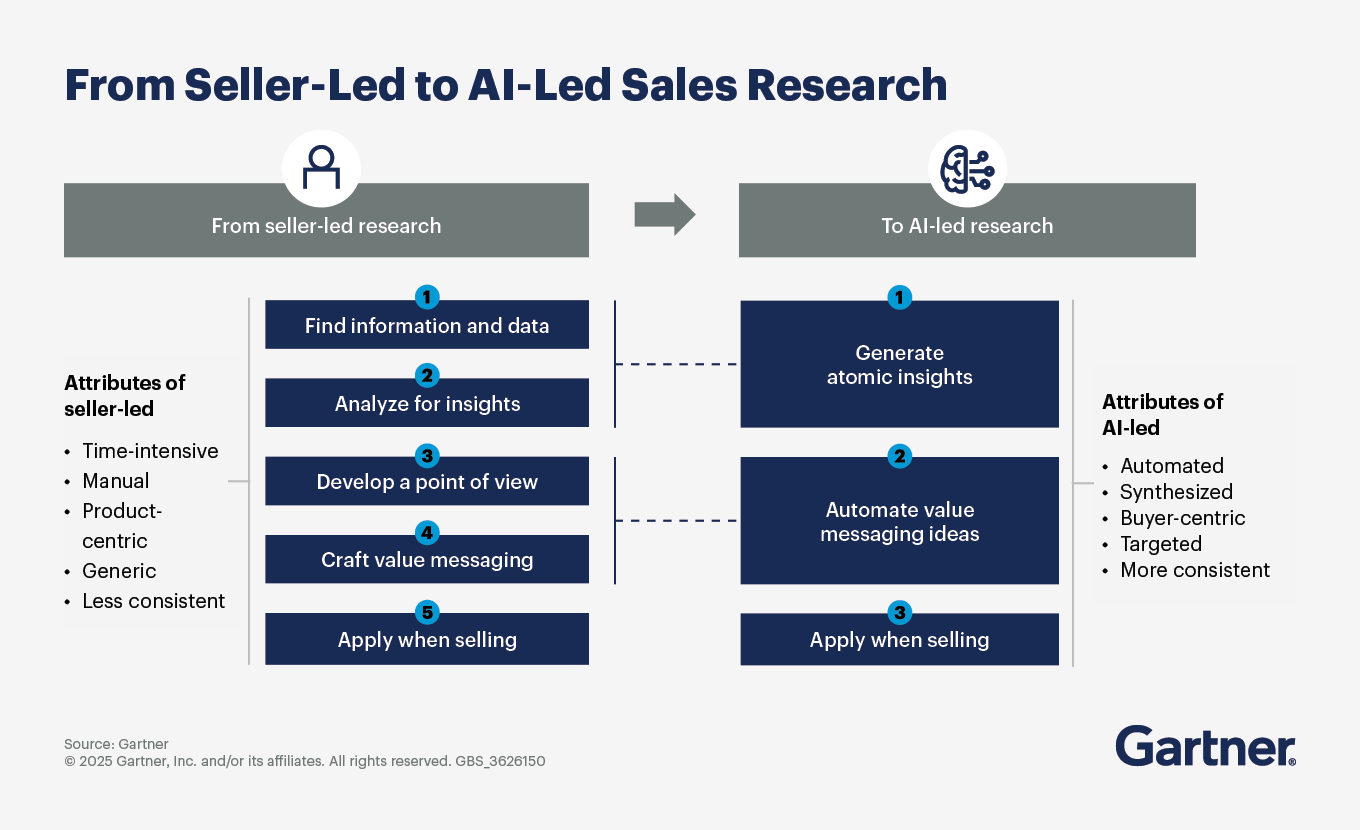
Gartner predicts 60% of seller work will be handled by generative AI by 2028. That does not mean replacement - it means augmentation. AI SDRs handle the repetitive work (initial outreach, follow-up, scheduling) while human SDRs handle the nuanced work (objection handling, relationship building, complex qualification). The teams that win will use AI for volume and humans for judgment.
How does Parsley's approach differ from Drift or Intercom?
Drift (now Salesloft) and Intercom place chatbots on your company website. Parsley places a chatbot on each rep's individual profile - a shareable link used in outbound, email signatures, and events. The difference: website chatbots capture anonymous traffic. Parsley captures intent from prospects your reps are actively engaging. The chatbot also detects MEDDIC signals passively, which website chat tools do not do natively. Learn more about how AI chatbots are replacing static sales collateral.
The Bottom Line
AI SDRs and AI chatbots are not competitors - they are complements. AI SDRs solve the reach problem (getting in front of cold prospects at scale). AI chatbots solve the qualification problem (understanding what prospects want before the first call).
If you only have budget for one, the answer depends on your bottleneck. Pipeline generation problem? Start with an AI SDR. Qualification and conversion problem? Start with an AI chatbot. If you are not sure, ask yourself: are my reps struggling to get meetings, or are they struggling to know what to say in meetings?
Parsley is the sales intelligence tool that captures what prospects ask, detects MEDDIC signals passively, and gives reps pre-call context that no AI SDR can provide.
- Passive MEDDIC detection - qualification from conversation, not interrogation
- Contact-level intent data - know what individuals care about, not just accounts
- CRM sync - signals flow to HubSpot, Salesforce, or Attio automatically
- Free to start - create your profile in 2 minutes
Create your free profile | See pricing
Related Articles: