8 Best 6sense Alternatives and Competitors for SMB Teams (2026)
Looking at 6sense competitors? It is built for enterprise RevOps with six-figure budgets. These 8 alternatives capture buyer intent without the contract or headcount.
Why trust this list?
Peter Duffy has spent 20+ years in B2B sales and has used or evaluated most of the tools on this list first-hand. These recommendations are based on real experience - not sponsorships or affiliate deals.
The best 6sense alternatives for SMB sales teams in 2026 are Parsley, RB2B, Warmly, Demandbase, ZoomInfo, HubSpot Breeze Intelligence, Koala, and Bombora. Each captures some form of buyer intent signal, but they split sharply on two questions: do you get first-party data or modelled third-party data, and can you deploy without an enterprise contract?
6sense is a strong platform for enterprise revenue operations teams that can absorb a six-figure annual contract, a dedicated RevOps owner, and a multi-month rollout. For SMB sales teams and individual sellers, that price tag and implementation lift rule it out before the features ever get evaluated. (For what the platform actually costs and how its credit system works, see our 6sense pricing breakdown.)
If you are looking for intent data without the enterprise overhead, here are eight alternatives worth testing.
Why Look for a 6sense Alternative?
6sense earns its reputation at the enterprise end of the market. Its intent graph, anonymous traffic resolution, and predictive AI are genuinely useful when you have the scale and budget to operate them. But most sales teams run into the same set of friction points:
| Limitation | What It Means for Smaller Teams |
|---|---|
| Enterprise pricing | Annual contracts commonly quoted in the low-to-mid six figures |
| Third-party signal model | Intent inferred from cookies and firmographics, not from what prospects actually say |
| Multi-month implementation | List uploads, topic configuration, CRM and MAP integration before value lands |
| Dedicated RevOps required | Value compounds with an owner running orchestration and keep-alive |
| Built for ABM at scale | Less useful for individual reps, small sales teams, or PLG motions |
The alternatives below fall into three groups: first-party intent tools (Parsley, RB2B, Warmly, Koala) that capture what real people do on assets you own, enrichment and contact platforms (ZoomInfo, HubSpot Breeze Intelligence) that layer intent on top of firmographic data, and the enterprise peers (Demandbase, Bombora) that compete with 6sense on its own turf.
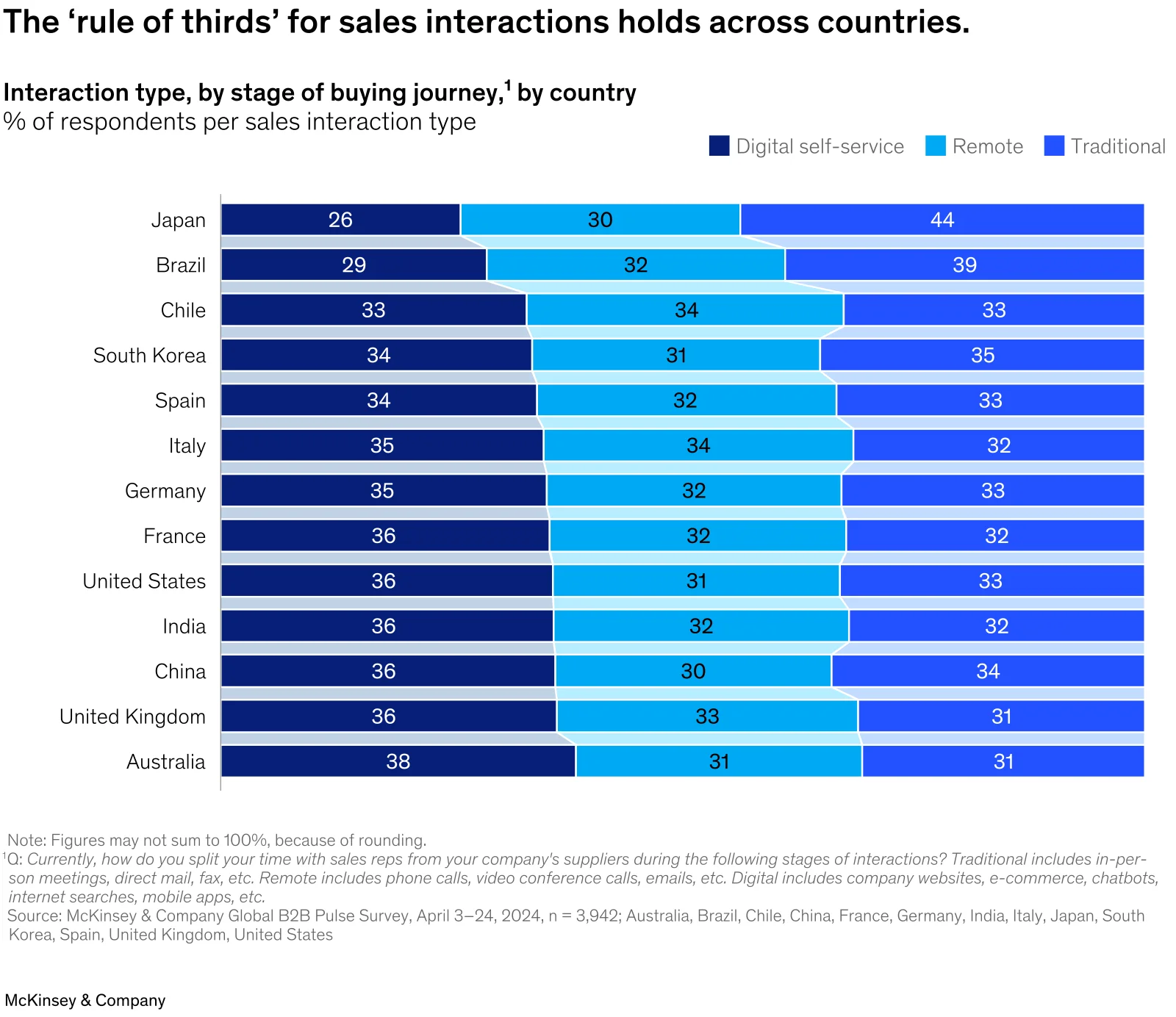
Source: McKinsey B2B Pulse 2024, "Five fundamental truths: How B2B winners keep growing".
One third of every buying journey is now digital self-serve. That is the third a first-party intent tool can actually see, and it is the third 6sense cannot reach without an enterprise contract.
1. Parsley - Best for SMB First-Party Buyer Intent
Best for: SMB sales teams that want first-party buyer intent without enterprise pricing or implementation
Parsley is the AI presales agent for LinkedIn and email, powered by Google Gemini. Reps drop a Parsley link on their LinkedIn profile and in outbound emails, and the agent answers prospects' questions from the team's own sales docs. It captures first-party buyer intent directly from those conversations, not from third-party cookies or modeled firmographic data.
What Sets It Apart
6sense infers that a buyer is in-market by watching anonymous web traffic and matching it against firmographic and topic models. Parsley captures what prospects actually say when they engage with your profile - their pain points, their decision criteria, their timeline. The difference between a model's guess and a buyer's own words is significant when it lands in your CRM as a follow-up signal.
Parsley uses passive MEDDIC detection, so signals are inferred from natural conversation rather than surfaced through a qualification questionnaire that kills engagement.
Key Features
- Presales agent that answers from your uploaded knowledge docs (PDF, TXT, MD up to 25MB)
- Passive MEDDIC signal detection from natural conversation
- Hot, Warm, and Cold lead scoring based on detected signals
- CRM sync to HubSpot, Attio, Salesforce, Salesflare, Folk, Twenty, Copper, and Capsule
- One link you share on your LinkedIn profile, in cold emails, InMails, and signatures
- Deployment in minutes, not months
Pricing
- Profile is free forever with links, content sections, contact capture, and basic analytics
- 10 free starter conversations at signup, then pay-as-you-go at 25¢ per conversation. Includes the presales agent, intent scoring, and CRM sync. Unlimited team seats share one conversation balance.
Pros
- First-party signals from the buyer, not third-party inference
- SMB-native pay-as-you-go pricing at 25¢ per conversation, with no enterprise contract
- No list uploads, no topic configuration, no multi-month rollout
- Deploys in minutes
Cons
- Does not resolve anonymous website visitors to company (different data model from 6sense)
- Newer platform with smaller integration catalogue than enterprise peers
Verdict: If you want buyer intent data without the enterprise lift, Parsley is the clear pick. For a detailed feature-by-feature breakdown, see the Parsley vs 6sense comparison.
First-party buyer intent, no enterprise contract
Parsley's presales agent captures buying signals from real prospect conversations and syncs them to your CRM. Free to start.
Get started free2. RB2B - Best Free Person-Level Website Visitor ID
Best for: SMB teams that want to identify individual US website visitors, not just companies
RB2B, founded by Adam Robinson, resolves anonymous US website visitors to named individuals with LinkedIn profiles and work emails. Most visitor-ID tools stop at the company; RB2B pushes resolution down to the person and does it on a genuinely useful free tier.
What Sets It Apart
Enterprise tools like 6sense infer intent at the account level: an anonymous session from a known IP range, scored against a firmographic model. RB2B takes a different route - it resolves the actual individual behind the session, hands you their LinkedIn, and drops an alert into Slack. For SMB sales teams, a named person with a LinkedIn URL is more actionable than an account-level probability score.
Adam Robinson builds RB2B in public on LinkedIn, drawing on a decade of B2B visitor-resolution work (his previous company, Retention.com, ran similar data infrastructure for ecommerce). The product is opinionated, fast, and priced so teams can install it without a procurement conversation.
Key Features
- Person-level website visitor identification (US only)
- LinkedIn profile and work email resolution
- Slack alerting on identified visitors
- Integrations with HubSpot, Salesforce, and Outreach
- Genuinely useful free tier, not a crippled trial
Pricing
- Free tier for US visitor ID
- Paid plans for higher volume and additional features
Pros
- Only free person-level visitor ID product in the US market
- Resolution quality is rare in this price band
- Fast setup - install a script, get alerts
- Opinionated, SMB-native roadmap
Cons
- US only
- Match rates vary by traffic source and device mix
- Captures that a visitor showed up, not what they are trying to buy
Verdict: The standout free pick for US-focused SMB teams. RB2B tells you who arrived on your site; a first-party tool like Parsley captures what they actually wanted from the conversation that followed. The two are complementary - pair RB2B's free visitor ID with Parsley for the cleanest SMB intent stack.
3. Warmly - Best for Mid-Market Website Visitor ID
Best for: Mid-market revenue teams focused on de-anonymising warm website traffic
Warmly identifies the companies and, in some cases, the individuals visiting your website, then routes warm accounts to reps through Slack or orchestration workflows. It is closer to 6sense's website-centric signal model than the other tools here.
Key Features
- Website visitor identification (company and contact level)
- Revenue orchestration and routing
- LinkedIn auto-outbound on warm accounts
- Slack alerting on high-intent sessions
- Integrations with HubSpot, Salesforce, and Outreach
Pricing
- Publishes list pricing: three annual tiers at $10,000, $20,000, and $30,000, with quarterly billing also offered
- The AI chat capability starts at the middle tier; the entry tier is visitor identification only
- See the full Warmly pricing breakdown for add-ons and the credit mechanics
Pros
- Strong website visitor resolution
- Fast time to first signal if you already have traffic
- Mid-market pricing is more accessible than 6sense
Cons
- Requires material website traffic volume to produce useful signals
- Signal quality depends on anonymous traffic matching, same data model as 6sense
- LinkedIn auto-outbound features can trip review thresholds if used aggressively
Verdict: Warmly is the most direct functional peer to 6sense on website intent, priced for mid-market teams. Less useful if your pipeline comes from outbound rather than inbound web traffic. See the Parsley vs Warmly comparison for a side-by-side look.
4. Demandbase - Best for Enterprise ABM Orchestration
Best for: Enterprise teams running account-based motions at scale
Demandbase is the closest like-for-like competitor to 6sense. It combines intent data, account identification, advertising, and orchestration into a single ABM platform aimed at enterprise RevOps teams.
Key Features
- Account identification and intent data
- ABM advertising platform
- Sales intelligence and account insights
- Orchestration and workflow automation
Pricing
- Enterprise pricing, annual contracts
Pros
- Mature ABM platform with deep feature coverage
- Strong integrations with major CRMs and MAPs
- Comparable data model to 6sense for direct swap-out
Cons
- Same enterprise contract and implementation profile as 6sense
- Not a budget or speed alternative, just a different vendor
- Overkill for SMB sales teams
Verdict: If the problem is vendor fit rather than category fit, Demandbase is the obvious swap. If the problem is price or complexity, this is not the alternative you are looking for. For a full side-by-side, see 6sense vs Demandbase.
5. ZoomInfo - Best for Contact Data with Layered Intent
Best for: Sales teams that need contact and company data first, with intent as a secondary signal
ZoomInfo is primarily a B2B contact and company database, with intent data layered on top through partnerships and its own signals. Many teams use it as a prospecting tool and treat intent as a tie-breaker for account prioritisation.
Key Features
- B2B contact and company database
- Intent signals by topic
- Account and contact tracking
- CRM and sequencer integrations
Pricing
- Mid-to-high enterprise pricing, annual contracts
Pros
- Market-leading contact data coverage
- Useful if your primary pain point is prospecting, not intent
- Broad integration ecosystem
Cons
- Intent is a secondary feature, not the core product
- Annual contract minimums rule it out for smaller teams
- Overlap with existing CRM enrichment can create redundant spend
Verdict: Right tool if your gap is contact data with intent as a bonus. Wrong tool if intent accuracy and freshness are the primary requirement. For the full head-to-head, including how differently the two build their intent data, see 6sense vs ZoomInfo.
6. HubSpot Breeze Intelligence - Best for HubSpot-Native Enrichment
Best for: Teams already standardised on HubSpot as the CRM and MAP
HubSpot Breeze Intelligence (the former Clearbit product, now folded into HubSpot) delivers firmographic enrichment and buyer intent signals natively inside HubSpot records. If HubSpot is your system of record, this is the path of least resistance.
Key Features
- Firmographic and technographic enrichment
- Buyer intent signals
- Native HubSpot workflow integration
- Form shortening and visitor reveal
Pricing
- Credit-based pricing tied to HubSpot plans
Pros
- Zero integration work if you already run HubSpot
- Enrichment and intent in one place
- Reasonable entry price for existing HubSpot customers
Cons
- Locked to HubSpot, no value outside that stack
- Intent data is a layered feature, not a first-class product
- Credit pricing can surprise teams that run high-volume enrichment
Verdict: Default pick if HubSpot is already your stack. Not a reason to switch CRMs.
7. Koala - Best for Product-Led Buyer Intent
Best for: PLG companies that want product usage signals alongside web signals
Koala combines website visitor identification with product usage signals, giving sales teams a view of both marketing and product intent. It is purpose-built for PLG motions where activation data is as useful as web visits.
Key Features
- Website visitor identification
- Product usage signal capture
- Account scoring across web and product
- CRM and Slack integrations
Pricing
- Mid-market pricing, lower than 6sense or Demandbase
Pros
- PLG-aware signal model, not just marketing intent
- Faster time to value than enterprise ABM platforms
- Strong Slack and CRM workflow integration
Cons
- Less useful if you do not have a self-serve product
- Smaller data coverage than enterprise peers
Verdict: Strong fit for PLG companies. Wrong fit if your motion is pure outbound or enterprise sales with no product trial.
8. Bombora - Best for Third-Party Intent Data Feeds
Best for: Teams that want raw third-party intent data to pipe into their own stack
Bombora is the upstream third-party intent data provider that powers many other tools in this category, including signals that feed 6sense and others. Buying direct gives you the raw feed to route into your own CRM, MAP, or orchestration layer.
Key Features
- Company Surge topic-based intent data
- Raw data feed for custom pipelines
- Integrations with major CRMs and MAPs
Pricing
- Annual contracts, enterprise pricing
Pros
- Source data, not a wrapper
- Useful if you have the data and RevOps maturity to operate it
- Works as a component in a custom stack
Cons
- Same third-party inference model as 6sense, just unbundled
- Requires RevOps headcount to operate
- Not a turnkey product
Verdict: The right answer for mature data teams who want the raw feed. Not a product for sales teams looking for turnkey intent.
Quick Comparison Table
| Platform | Free Tier | Signal Type | SMB-Friendly | CRM Sync | Best For |
|---|---|---|---|---|---|
| Parsley | Profile only | First-party (conversation) | Yes | Yes | SMB first-party intent |
| RB2B | Yes (US only) | First-party (visitor ID) | Yes | Yes | Free person-level ID |
| Warmly | Limited | Third-party (web traffic) | Mid-market | Yes | Visitor identification |
| Demandbase | No | Third-party | No | Yes | Enterprise ABM |
| ZoomInfo | No | Third-party (layered) | No | Yes | Contact data |
| HubSpot Breeze | Via HubSpot | Layered | Via HubSpot | Native | HubSpot-native stacks |
| Koala | Limited | First + third-party | Mid-market | Yes | PLG motions |
| Bombora | No | Third-party (source) | No | Via integration | Raw data feeds |
| 6sense | No | Third-party | No | Yes | Enterprise ABM |
First-Party vs Third-Party: The Real Split
Most tools in this category, including 6sense, operate on the same basic model: watch anonymous web traffic, resolve it to companies using cookie and firmographic data, then score the account for intent using topic models. It is a statistical inference that a buyer is probably in-market.
First-party intent is different. It is captured from real conversations a real prospect has with your presales agent, on a profile you control. There is no inference, no third-party cookie deprecation risk, and no model drift. The buyer tells you what they are interested in because they asked a question.
Both models have their place. Enterprise teams with high anonymous traffic benefit from third-party resolution. SMB teams with more outbound and LinkedIn-driven pipeline benefit from first-party capture on the assets they actually share. For a deeper dive on why that split matters, read the guide to buyer intent software.
How to Choose the Right 6sense Alternative
Pick based on three questions: how big is your budget, what does your pipeline actually look like, and what signal model do you trust?
- If you are SMB or an individual seller and want first-party conversational intent at SMB pricing - Parsley
- If you are SMB and need a free tier for US visitor ID - RB2B
- If your pipeline is inbound website traffic at mid-market scale - Warmly or Koala
- If you need enterprise ABM and 6sense is wrong on vendor fit only - Demandbase
- If you need contact data first, intent second - ZoomInfo
- If HubSpot is your system of record - HubSpot Breeze Intelligence
- If you have a RevOps team and want raw data - Bombora
The most common mistake is picking a tool for a data model that does not match how your pipeline actually works. Third-party intent data is only useful if you have the traffic and contract size to justify the spend. First-party intent is useful from the first conversation, regardless of traffic volume.
Frequently Asked Questions
Is 6sense worth paying for in 2026?
6sense is worth it for enterprise revenue teams with the budget, RevOps headcount, and anonymous traffic volume to operate it. For SMB sales teams, the contract size and implementation lift rarely pencil out, and tools like Parsley capture a different and often higher-quality signal at a fraction of the cost.
What is the cheapest 6sense alternative?
RB2B has a genuinely useful free tier for US person-level visitor ID. Parsley's profile is free forever, and the presales agent runs on conversations - 10 free starter conversations at signup, then 25¢ per conversation. CRM sync and intent scoring are included on every account. The two tools are complementary rather than competing - RB2B tells you who arrived, Parsley captures what they actually asked.
What is the best 6sense alternative for SMB sales teams?
Parsley is the SMB-friendly alternative: first-party intent from presales agent conversations, pay-as-you-go at 25¢ per conversation (10 free starter conversations, unlimited team seats), and deployment in minutes. No list uploads, no topic configuration, no enterprise contract. For context, 6sense is built for enterprise revenue operations with dedicated RevOps, while Parsley is built for individual sellers and small sales teams.
Does 6sense capture first-party intent?
6sense primarily infers intent from third-party sources like cookie-based web browsing, firmographic data, and topic models. It is a statistical model of which accounts are likely in-market. First-party intent, in contrast, comes from a buyer's own words and actions on assets you control, such as conversations with a presales agent on your profile.
Can I switch from 6sense without losing my account data?
Yes. Most 6sense alternatives let you export your account lists and import them into the new tool. If you are switching to a first-party model like Parsley, you do not need to migrate the underlying account data at all, since the new signals are captured from conversations rather than from a pre-defined account list.
The Bottom Line
6sense is the right tool for one specific buyer: enterprise revenue operations teams with the budget, headcount, and anonymous traffic to justify it. For everyone else, the 2026 market has cheaper, faster, and often higher-quality alternatives.
- Best for SMB first-party intent - Parsley
- Best for website visitor ID - Warmly
- Best for enterprise ABM swap - Demandbase
- Best for contact data - ZoomInfo
- Best free pick - RB2B (US only)
- Best for HubSpot stacks - HubSpot Breeze Intelligence
- Best for PLG motions - Koala
- Best for raw data feeds - Bombora
The pattern across this list is consistent: the tools that compete with 6sense on its own terms carry 6sense-level complexity and cost. The tools that beat 6sense for SMB teams win by changing the signal model, not by undercutting the price.
For a wider view of the category beyond 6sense and its direct alternatives, see our comparison of the best intent data providers for B2B sales, which covers the third-party and first-party signal sources side by side.
Ready to capture buyer intent without the enterprise contract?